Klara Hayes · 7 November 2026
Swiftvale Students Channel Exam Success into Farm-to-Festival Art Projects
Swiftvale students who achieved strong results in their summer examinations have directed that momentum toward collaborative art initiatives linking local farms directly to upcoming festival displays, and these projects now form a visible thread through town planning for November 2026 events. Local schools reported pass rates above regional averages according to Department for Education figures, which prompted several year groups to pool resources and ideas rather than disperse after the academic year closed.
From Exam Halls to Workshop Spaces
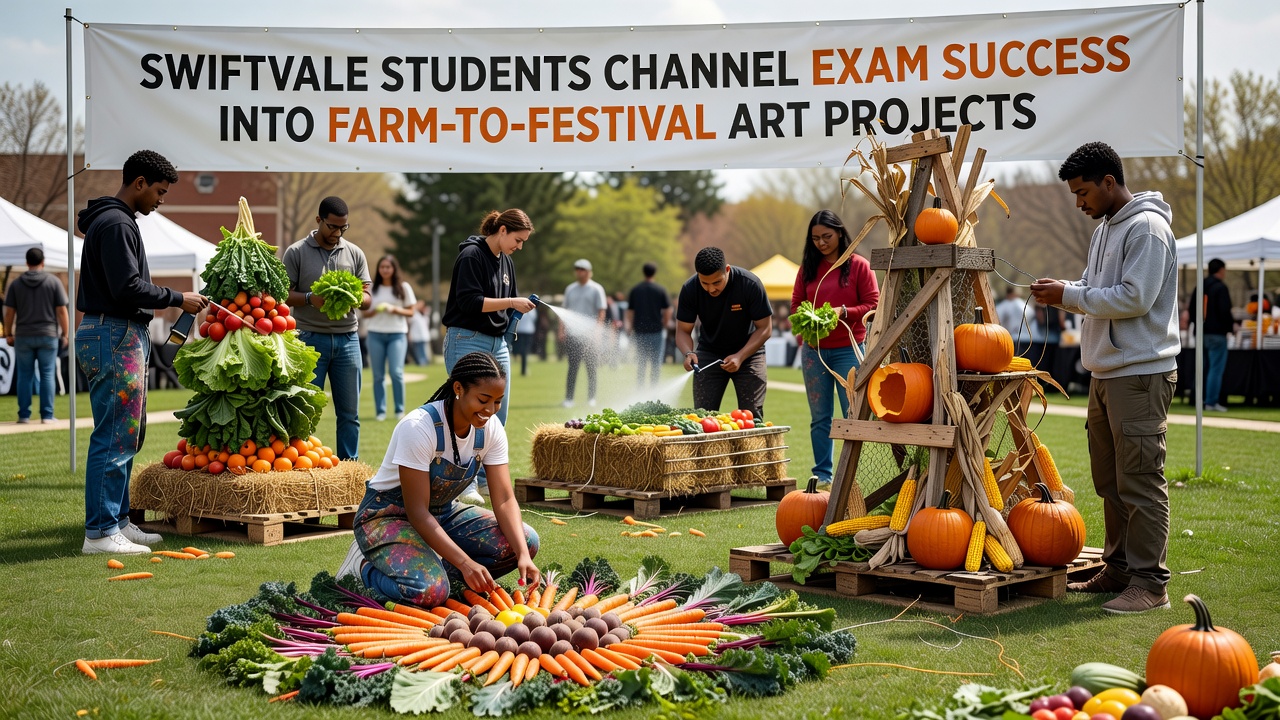
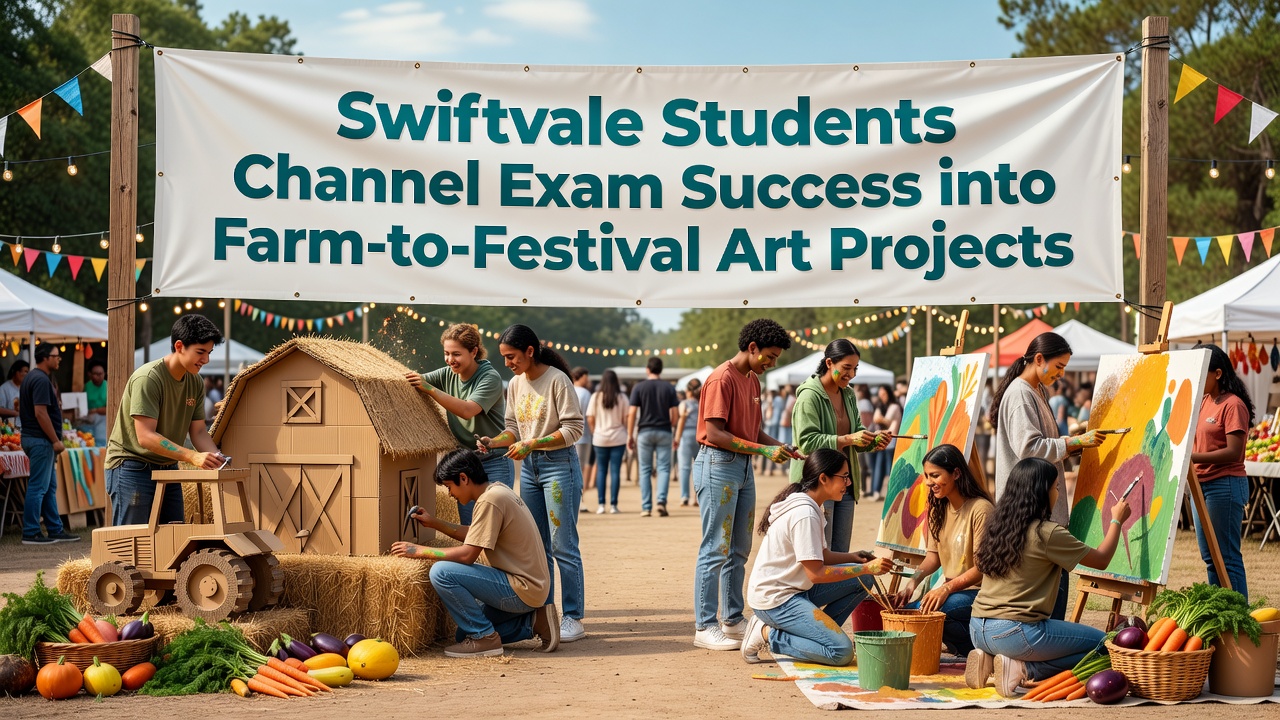
Teachers noted that many pupils wanted to apply the discipline gained during revision periods to tangible community outputs, so they arranged after-school sessions at the old mill annex where participants sketch, sculpt, and assemble pieces using produce and materials sourced from nearby farms. One group focused on textile banners that incorporate pressed leaves and seed patterns collected during harvest, while another constructed large-scale installations from reclaimed wood and ceramic tiles fired with natural glazes derived from valley soils. These activities run alongside regular farm visits, allowing students to observe crop cycles and translate those observations into visual narratives scheduled for festival walls and pop-up galleries.
Partnerships That Shape the Work
Farm owners supply surplus produce for still-life studies and donate space for outdoor sketching days, and festival organizers in turn allocate prominent display areas within the November 2026 programme. This arrangement keeps the projects grounded in seasonal realities rather than abstract themes, because students must account for weather patterns, harvest timing, and market availability when planning their timelines. Data from the Arts Council England shows similar education-to-community pipelines have increased youth participation in regional exhibitions by measurable margins over the past three years, and Swiftvale appears to follow that pattern as enrollment in the workshops continues to climb.
November 2026 Timeline and Logistics
Preparations intensify in the months leading to November because festival coordinators require final designs by late October to allow safe installation across multiple venues. Students coordinate with transport volunteers who move finished pieces from the mill workshops to the high street and riverside sites, and they also schedule live demonstration days so visitors can watch elements being assembled on site. Funding comes from a combination of school grants, small business sponsorships, and ticket sales from preview events, which together cover materials, insurance, and basic equipment without drawing on core council budgets.
Skills Beyond the Canvas
Participants develop project-management abilities while balancing exam-refined study habits with the demands of group deadlines, and several have documented their processes in journals that double as portfolio entries for further education applications. Observers note that the cross-generational contact with farmers and festival staff broadens the students' understanding of supply chains and audience expectations, turning academic success into practical experience that extends well past graduation. Local businesses report steady foot traffic on workshop open days, because families and shoppers stop to view progress and sometimes contribute small donations of tools or surplus stock.
Conclusion
The initiative illustrates how Swiftvale pupils convert examination results into sustained community contributions that intersect agriculture, education, and public celebration. As November 2026 approaches, the completed artworks stand ready to anchor festival programming, and the model offers a replicable structure for other towns seeking to connect academic milestones with local economic and cultural activity.